

The state Department of Natural Resources board voted unanimously Wednesday to approve .27-acre easements along six Southwest Georgia waterways that will allow the Sabal Trail natural gas pipeline to pass under the waterways.
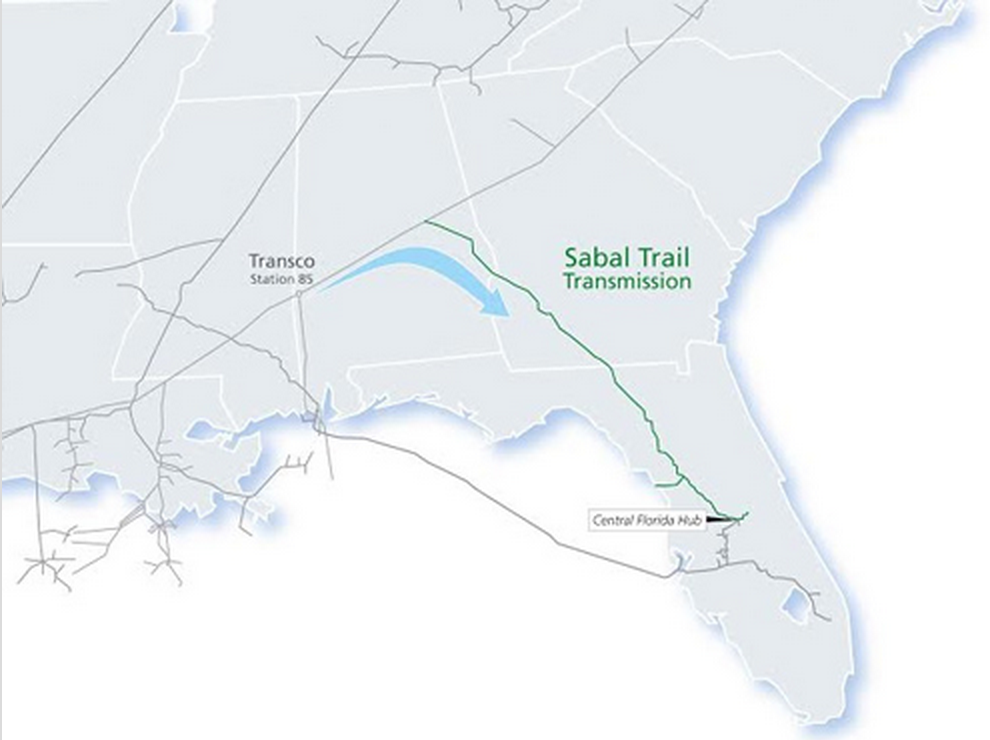
The board’s action, coming in the wake of the release of the Federal Energy Regulatory Commission’s Draft Environmental Impact Statement, moves the controversial 515-mile pipeline a step closer to reality.
Former Dougherty County Commission Chairman Jeff Sinyard is one of 19 members of the state DNR board, 17 of which voted at Wednesday’s hearing.
“With the facts that were presented, there just was no traction for the easements not to go through,” Sinyard said. “All of the issues surrounding the pipeline were well-discussed. There just wasn’t traction to deny the easements.”
Sinyard had been contacted Monday by Dougherty County Attorney Spencer Lee on behalf of the County Commission.
“I did exactly what the commission requested,” Lee said Wednesday. “(District 4) Commissioner Ewell Lyle had received an email from Dinorah Hall (a Dougherty County property owner who has strongly opposed the natural gas pipeline) requesting that commissioners ‘contact Jeff Sinyard and ask him to stand for the Flint and other rivers.’ The commission decided that, rather than each of them contacting Jeff, I call him and convey the message. I did that as directed by the commission.”
Sinyard said that while there was no evidence presented at the DNR board meeting that would have led members to oppose the easements, he did take the opportunity to speak on Dougherty County’s behalf about a planned compressor station that would be located in the county.
“During the meeting, I was able to speak out — and very passionately — about the impact of that proposed compressor station in our county,” Sinyard said. “I asked the board to imagine all of that land along the pipeline route from Alabama through Georgia to Florida, and to try and come up with a reason — other than finances — why one of five compressor stations would be located in Dougherty County, the most populated area along the route. It doesn’t make sense.”
“Further, I pointed out that, if a compressor station has to be located in Dougherty County, there’s no reason why it couldn’t run on electricity, not gas. There would be less emissions, it would operate cleaner, and it would be safer. My primary concern in the meeting was to make sure all of the facts were included so the board could make a prudent decision. Part of that was making sure (board members) knew how compressor stations work and the dangers they pose by not being located in a more rural, less densely populated area.”
Sinyard also said he spoke with a number of state and local officials before Wednesday’s meeting about the technology used to locate the pipeline under waterways like the Flint.
“I wanted to make sure the borings under the navigable waterways were deep enough, that the correct method was used in the process and that they would be as safe environmentally as possible,” he said. “What I learned is that the technology used is proven technology. No matter how I felt personally, I couldn’t ignore the facts.
“I just hope something good comes of the information I was able to pass along (about the compressor station).”
The State Properties Commission is the next body that will consider the easement issue. State and federal officials will hold one of seven public hearings on the Draft Environmental Impact Statement at the Albany Civic Center Monday.
This article was written by Carlton Fletcher and originally published by the Albany Herald on September 21, 2015. Click here to view the full article →