

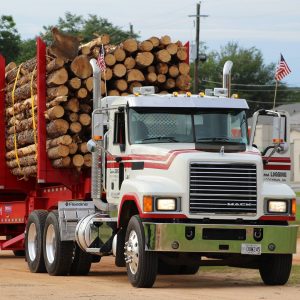
Gov. Brian Kemp’s emergency order provides temporary fuel-cost relief and adjusts state truck weight limits amid global market volatility.
Georgia is providing temporary relief to businesses and motorists facing fuel-cost pressures. On September 28, Gov. Brian Kemp declared a state of emergency, suspending the state’s motor fuel excise tax for 30 days and temporarily increasing allowable state truck weight limits for commercial vehicles.
Both measures could provide relief to Georgia’s forestry sector, where fuel and transportation costs are significant expenses throughout the forest products supply chain.
What’s Changing?
Motor Fuel Tax Suspension
Georgia’s gasoline and diesel excise taxes are suspended from September 29 through October 29, 2026, at 11:59 p.m., unless further action is taken.
The temporary suspension provides direct relief to loggers, truckers and other forestry-related businesses that rely heavily on fuel to harvest, transport and process forest products.
Temporary State Truck Weight Increase
The emergency order also temporarily increases allowable state truck weight limits for commercial vehicles to 95,000 pounds for five-axle vehicles.
Businesses seeking to operate at these higher allowable weights must first obtain a permit through the Georgia Department of Public Safety’s Commercial Vehicle Enforcement division.
Permits are available by calling 844-837-5500 or through the Georgia Permitting and Routing Optimization System.
Businesses should confirm applicable permit requirements and operating restrictions before using the temporary weight allowance.
Why It Matters for Georgia Forestry
Georgia’s forestry industry depends on a complex supply chain connecting landowners, loggers, truckers, mills and forest products manufacturers. Fuel and transportation expenses affect each part of that system.
The fuel tax suspension offers immediate, temporary relief for businesses with substantial fuel consumption. Meanwhile, the temporary increase in state truck weight limits could help reduce transportation costs for eligible operators, subject to applicable permitting requirements.
While these measures are temporary, they provide potential cost relief for an industry navigating continued market challenges.
What Happens Next?
The fuel tax suspension is currently scheduled to end on October 29, 2026, at 11:59 p.m., unless further action is taken. Businesses should monitor state announcements for updates to the emergency order and its provisions.
The Georgia Forestry Association thanks Gov. Kemp and Georgia’s state leaders for their efforts to provide relief to Georgians and businesses during this period of fuel supply disruptions.
Read the Governor’s Executive Order: View the September 28, 2026, Executive Order (PDF)
Additional information: Georgia Department of Public Safety Permitting Portal