

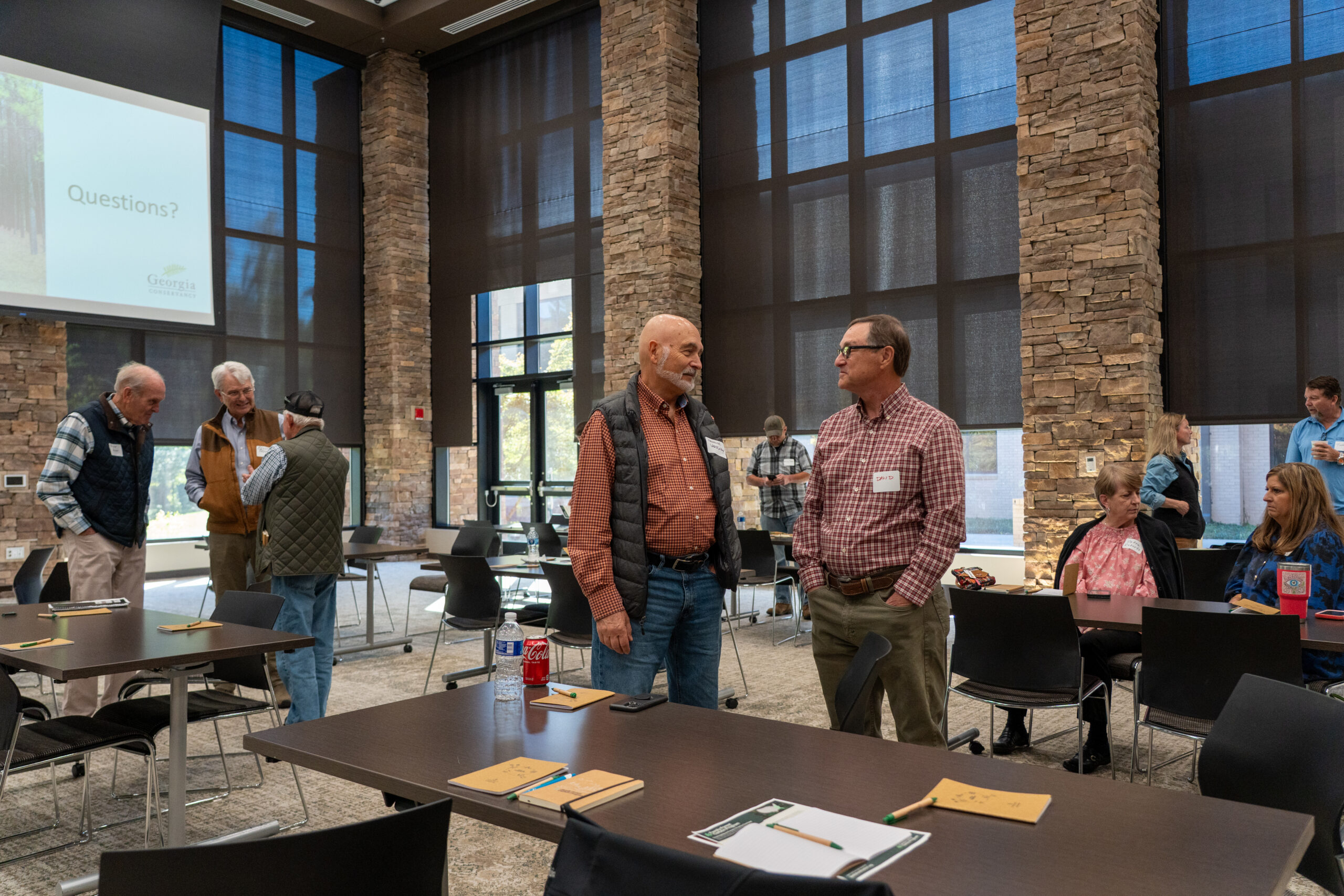
STATESBORO, Ga. — November 10, 2026 — With changing timber markets creating new challenges for Georgia’s forest landowners, the Georgia Forestry Association (GFA) brought together industry experts for an Alternative Revenue Workshop in Statesboro.
Supported by grants from the Georgia RISE and National Fish and Wildlife Fund, the workshop focused on opportunities to diversify income from working forests, including hunting leases, pine straw harvesting, conservation easements, agritourism, and carbon markets.
The central message throughout the day was straightforward: Alternative revenue can create additional opportunities for landowners, but it should complement—not replace—the traditional timber markets that remain the foundation of Georgia’s forest economy.
Matt Hestad, Senior Vice President of the Georgia Forestry Association and Georgia Forestry Foundation, opened the workshop with an overview of the challenges facing forest landowners and the importance of maintaining the economic viability of working forests.
Since the 2010s, the U.S. forest products economy has experienced a significant decline in demand, with Georgia losing approximately 8.3 million tons of annual wood demand following changes in the forest products industry and facility closures. Those market pressures, combined with rising land values, development, storm damage and other threats, have made it increasingly important to identify new ways to support the long-term ownership and management of forestland.
Hestad also highlighted ongoing efforts by GFA and its partners to strengthen Georgia’s forest economy through new manufacturing investment, market development and emerging opportunities for forest-based products.
“Alternative revenue opportunities should be in a position to complement what you’re doing today. They should not be in opposition to what you’re trying to do from a forest management perspective,” was the central message of his presentation.
Exploring Opportunities on Working Forests
The first presentations focused on recreational opportunities and the potential to generate additional income from existing timberland.
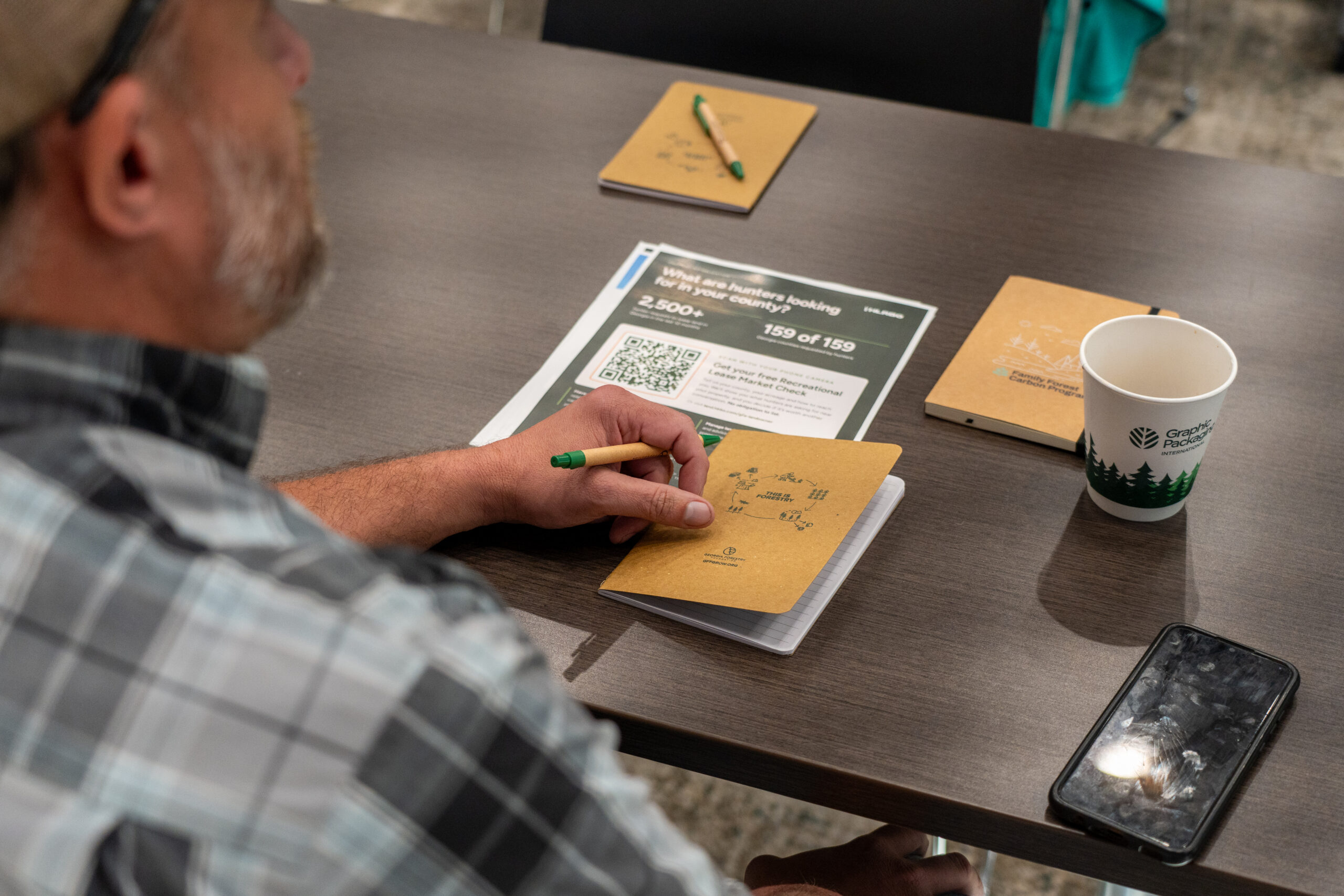
Stephen McNeil, Landowner Relations and Field Representative Manager for HLRBO, discussed how hunting leases can provide an additional revenue stream while allowing landowners to maintain control over their property.
Using HLRBO market data, McNeil illustrated the demand for private hunting access in Georgia, where hunter requests significantly outnumber available private listings. He also discussed factors that influence lease values, including acreage, wildlife habitat, accessibility, and proximity to hunters.
McNeil emphasized that landowners could establish their own lease terms, select participating hunters, and determine how hunting access fits alongside timber harvesting, prescribed fire and other management activities.
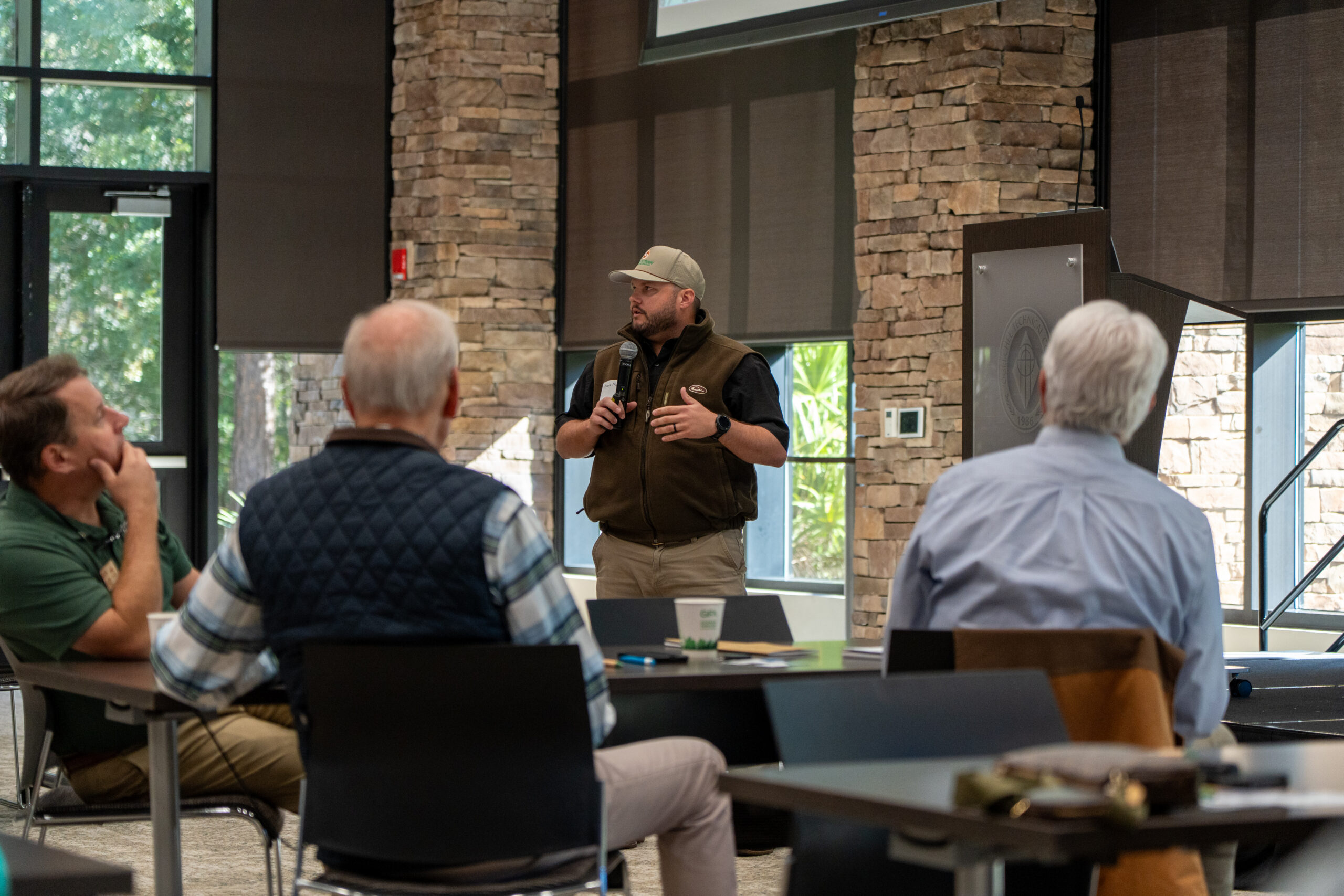
Ronnie Martinez, Operations Manager – East for Swift Straw, followed with a look at the potential for additional revenue through pine straw harvesting in longleaf and slash pine stands.
Martinez explained how species, stand age, tree spacing, understory conditions, road access and proximity to markets influence the viability of a pine straw operation. He shared company-specific lease ranges for longleaf pine and slash pine, while emphasizing that actual offers depend on individual property conditions.
He also highlighted the importance of proper stand management and site preparation, explaining how mowing, understory management, and equipment access can influence both harvesting opportunities and potential returns.
Conservation and Agritourism Provide Additional Options
Courtney Reich, Coastal Director for Georgia Conservancy, discussed conservation easements and the financial tools available to landowners interested in protecting their property while maintaining ownership.
Reich explained how conservation easements can provide economic value through the sale of certain development rights while allowing landowners to retain ownership and continue approved uses of their property. Depending on the agreement, landowners may retain rights related to timber management, agriculture, recreation, and other activities.
She also outlined federal and state conservation programs, including agricultural conservation easements, the Georgia Farmland Conservation Program and other working lands initiatives. With more than 90% of Georgia’s land privately owned, Reich emphasized the important role private landowners play in the state’s long-term conservation efforts.
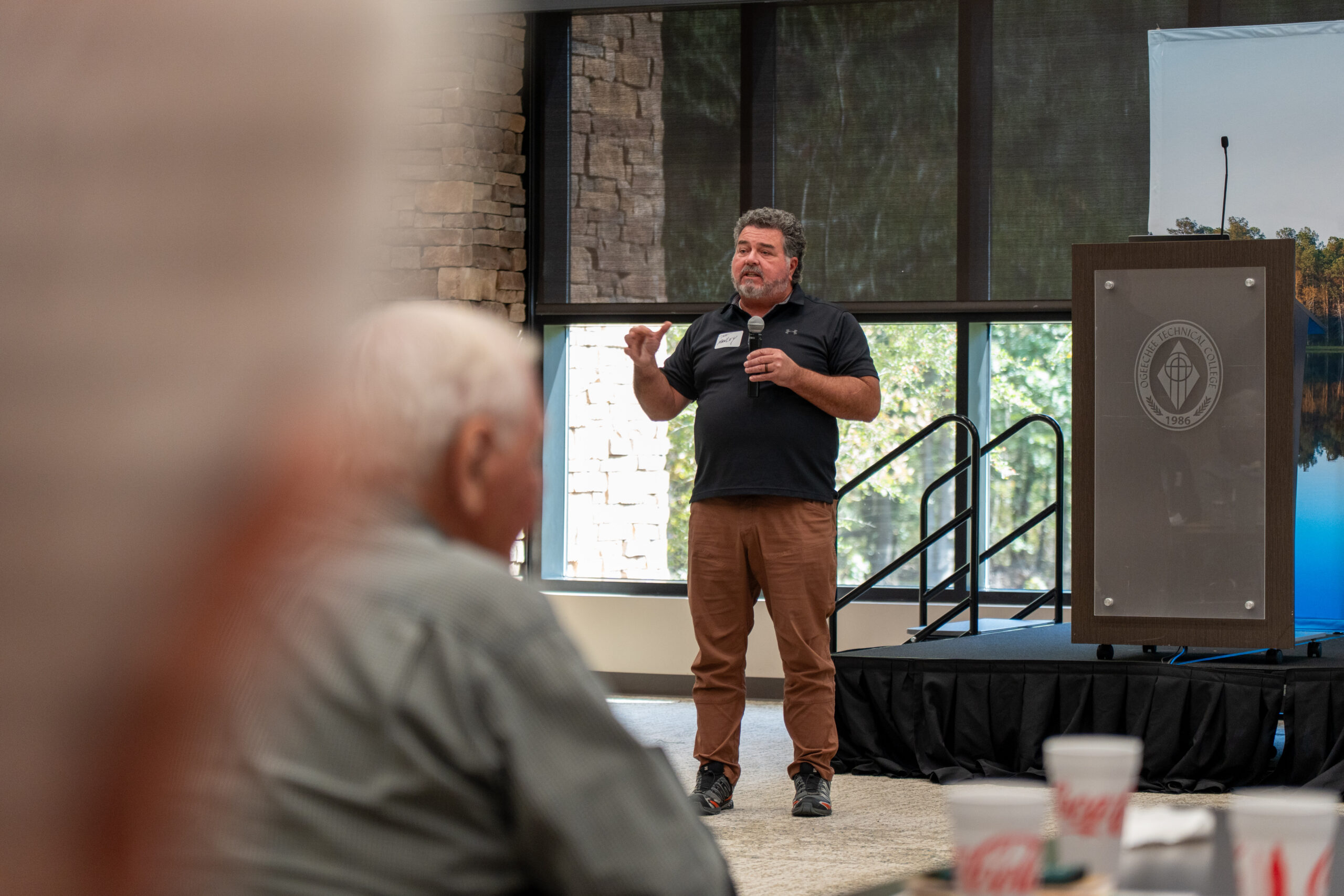
Jeff Manley, Agritourism Development Strategist with the Georgia Department of Agriculture, explored opportunities to generate revenue through agritourism and ecotourism.
Drawing from his experience helping develop The Rock Ranch in Thomaston, Manley shared examples of how working farms and forests can become destinations for school field trips, corporate events, outdoor recreation and educational experiences.
He emphasized that landowners do not necessarily need elaborate facilities or major investments to explore these opportunities. Existing natural features, timber operations, ponds, trails and open spaces can provide a starting point for activities that attract visitors and create additional income.
Manley also encouraged landowners to understand local zoning requirements, county regulations, liability considerations, and the operational responsibilities that come with hosting visitors.
Emerging Markets Create New Possibilities for Landowners
The final presentations turned toward carbon markets, forest management incentives, and emerging opportunities tied to the environmental benefits of healthy forests.
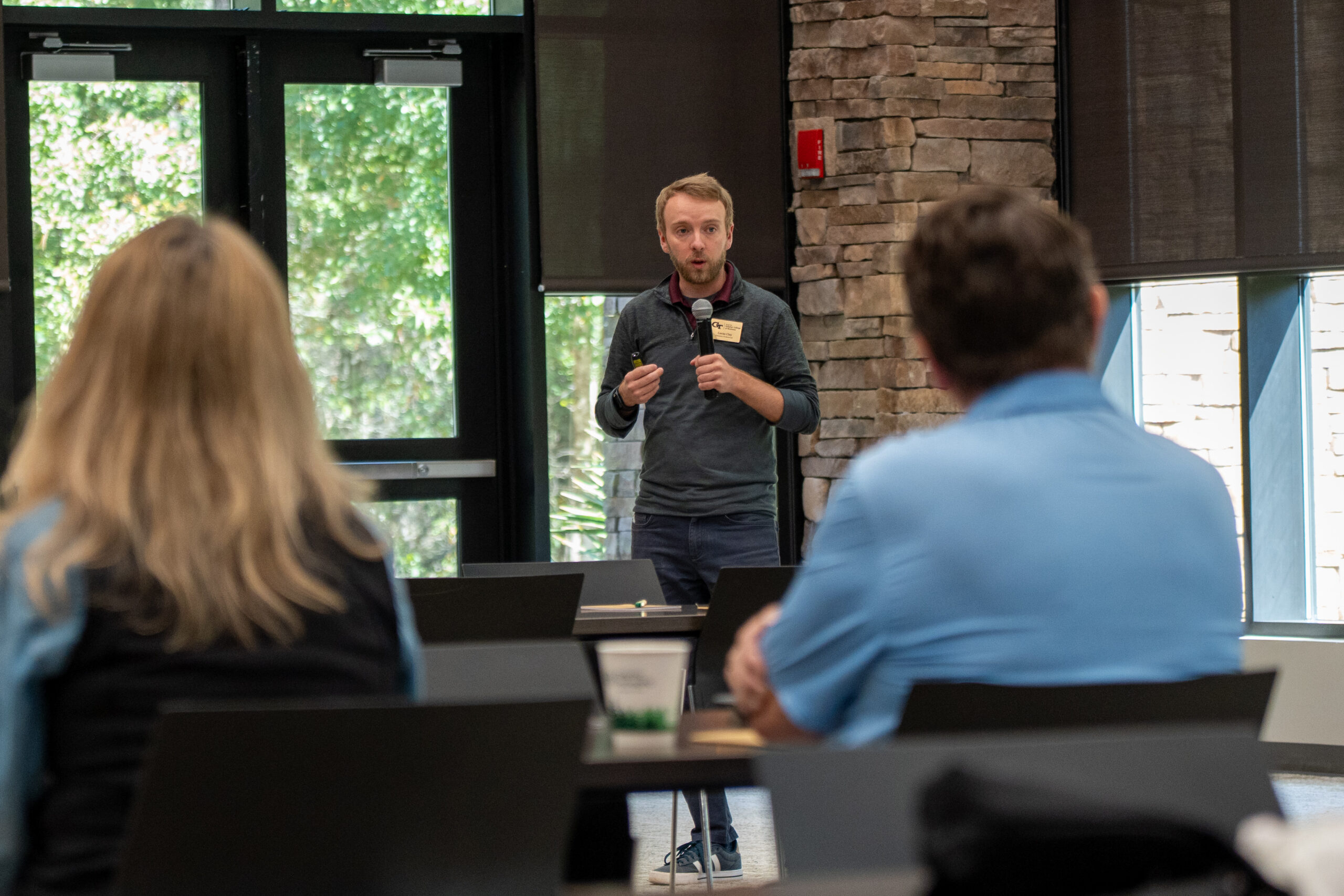
Lucas Clay, Ph.D., of the Ray C. Anderson Center for Sustainable Business at Georgia Tech, introduced the Georgia Carbon Exchange, an initiative developed through the Drawdown Georgia Business Compact and its partnership with the Georgia Forestry Foundation.
The initiative is focused on connecting Georgia-based businesses interested in investing in nature-based solutions with landowners who can provide measurable environmental benefits. Through the broader Georgia RISE partnership, the effort seeks to develop credible, verifiable markets for carbon and other ecosystem services while creating opportunities for private landowners.
Clay discussed how improved forest management practices, including extended rotations, adjusted harvesting and other stewardship activities, can create additional carbon storage opportunities. He also highlighted the importance of third-party verification, credible measurement standards, and developing a dependable base of buyers before expanding these markets.
Molly Hooks, Outreach Forester with the American Forest Foundation’s Family Forest Carbon Program, presented additional opportunities for landowners through two programs available in Georgia.
The Growing Mature Forests program provides eligible hardwood landowners with annual payments, forestry expertise and a management plan while allowing certain sustainable harvesting activities. The Fields and Forests program offers another pathway for landowners interested in converting eligible open pasture or cropland into planted pine stands, with assistance for establishment and annual payments over the life of the program.
Both programs are designed to connect landowner stewardship goals with emerging carbon market opportunities while helping maintain productive forestland for future generations.
Ernie Spiller, Landowner Enrollment Specialist with Funga, closed the presentations with a look at the role of soil health and native, growth-promoting fungi in improving forest productivity.
Spiller explained how Funga uses soil sampling, DNA analysis and field trials to identify native fungal communities that can support tree growth, nutrient availability, and overall forest health. He shared results from the company’s field trials, which showed growth improvement and higher gains among selected inoculants.
He also outlined Funga’s Southern Pine Carbon Program, which combines soil restoration and improved seedling establishment with carbon market financing. The program offers participating landowners access to soil inoculation and potential annual payments while retaining timber revenue, subject to program requirements and a long-term commitment.
Keeping Landowners at the Center of the Conversation
While the presentations covered a wide range of opportunities, one message remained consistent: landowners should carefully evaluate any new revenue opportunity against their individual property goals and objectives.
Before entering an agreement, landowners should understand what rights or management flexibility they may be giving up, the length of the commitment, potential costs and risks, and how results and payments will be verified.
An opportunity that works well for one property may not make sense for another. Working with a consulting forester, family members, and trusted resource partners can help landowners make informed decisions about their options.
Throughout the workshop, GFA’s Landowner Outreach team encouraged attendees to take advantage of the organization’s network of partners and resources when evaluating new programs or management opportunities.
The goal is not simply to identify another source of income. It is to help landowners maintain the economic value of their property, navigate changing markets, and keep Georgia’s working forests productive for generations to come.
More options. Stronger markets. Forests worth keeping.
That is the opportunity ahead for Georgia forestry.
Connect with GFA to Learn More
GFA’s Forest Stewardship and Technical Assistance Program offers landowners direct support through our team of foresters and available resources online. Contact our team or visit GeorgiaForestry101.com to learn more.