

As Georgia legislators begin looking ahead to the 2027 General Assembly, agriculture took center stage in Perry on Thursday, August 20, at the Ag Issues Summit at the Georgia National Fairgrounds & Agricenter. This years event also served as the fist meeting of the Joint Study Committee on Generational Sustainability of Family Farms.
The annual summit brings together members of the Georgia Senate and House Agriculture & Consumer Affairs Committees for a joint session focused on the issues shaping the future of Georgia agriculture. It is an important opportunity for legislators to hear directly from industry leaders and begin developing perspectives that could influence legislation when the 2027 General Assembly convenes in January.
Opening remarks were delivered by Sen. Russ Goodman, Chairman of the Senate Agriculture & Consumer Affairs Committee, and Rep. Robert Dickey, Chairman of the House Agriculture & Consumer Affairs Committee. Georgia Agriculture Commissioner Tyler Harper was also in attendance.
Forestry Is Agriculture, Too
While forestry operates on a different timeline than traditional row crops or livestock, the connection is clear: many Georgia agricultural operations also manage timberland as part of their overall business. In that sense, forestry is agriculture — just with much longer rotations.
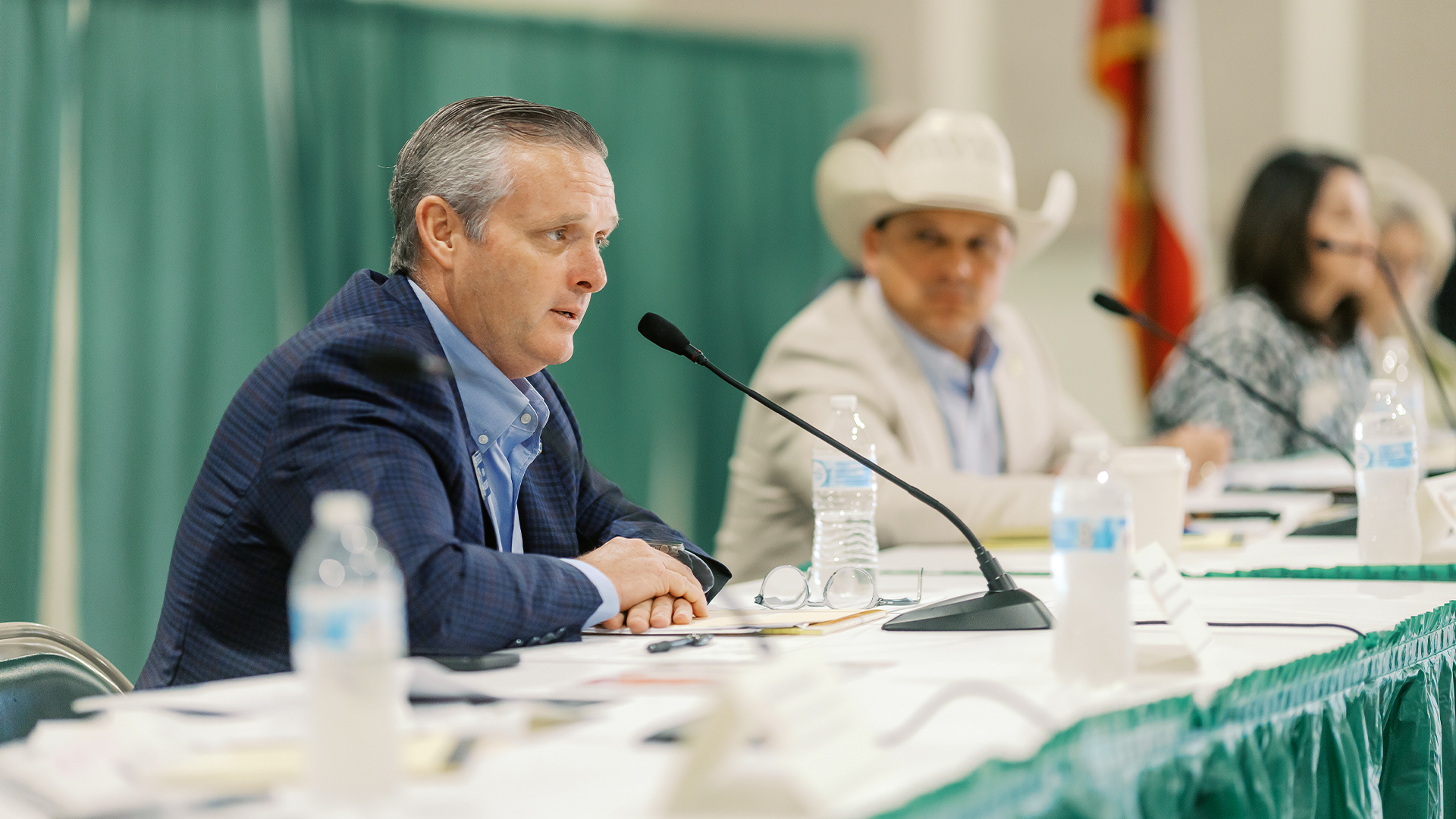
Representing Georgia’s forest industry, Marshall Thomas, President of F&W Forestry, testified before the committees on Forecasting Forest Markets.
Thomas highlighted the importance of maintaining strong, reliable markets for Georgia’s forest landowners and thanked legislators for their support of HB 134, the Keep Georgia Forested Act, which established a $250 million tax credit to encourage new investment in forestry manufacturing in Georgia.

Markets Matter for Forest Management
Thomas encouraged legislators to continue supporting policies that protect and expand market opportunities for Georgia’s forest landowners.
Why? Because markets provide an economic incentive for landowners to actively manage their forests.
Without viable markets for timber, landowners can lose the financial incentive to invest in thinning, harvesting and reforestation — practices that help maintain healthy, productive forests.
Thomas warned that losing those markets could have consequences far beyond the forestry industry. He pointed to the Western United States, where decades of fire suppression and resulting fuel buildup have contributed to increasingly severe wildfire challenges.
Georgia’s forests face a different set of circumstances, but the broader lesson remains: actively managed forests are healthier forests, and strong timber markets help make that management possible.
Preparing for 2027 General Assembly
The Ag Issues Summit provided an important opportunity to put forestry’s perspective in front of key agricultural policymakers as they begin preparing for the 2027 legislative session.
GFA was proud to sponsor the event alongside many partners, including Georgia Farm Bureau and the Georgia Agribusiness Council. These relationships are important as we continue making the case that forestry is a vital part of Georgia agriculture and a cornerstone of the state’s economy and rural communities.
As we move toward the 2027 General Assembly, GFA will continue advocating for policies that support forest landowners, strengthen Georgia’s forest products industry and ensure that our state remains a national leader in forestry.
GFA will keep members informed as the legislative session approaches and key issues develop.
Want to help support GFA’s advocacy efforts? Contact Jake Matthews, Vice President of Government Affairs, at jake@gfagrow.org to learn more about how you can get involved.