

This month, the Georgia Forestry Association and Georgia Forestry Foundation welcomed more than 75 landowners and forestry partners to Culloden for a Landowner Field Day focused on practical tools, real-world insights, and peer learning.

Designed to meet landowners where they are, the field day offered a series of hands-on sessions led by industry experts. Topics covered a wide range of critical management and planning areas, including estate planning, mill and producer market insights, chemical application best practices, and longleaf pine management.
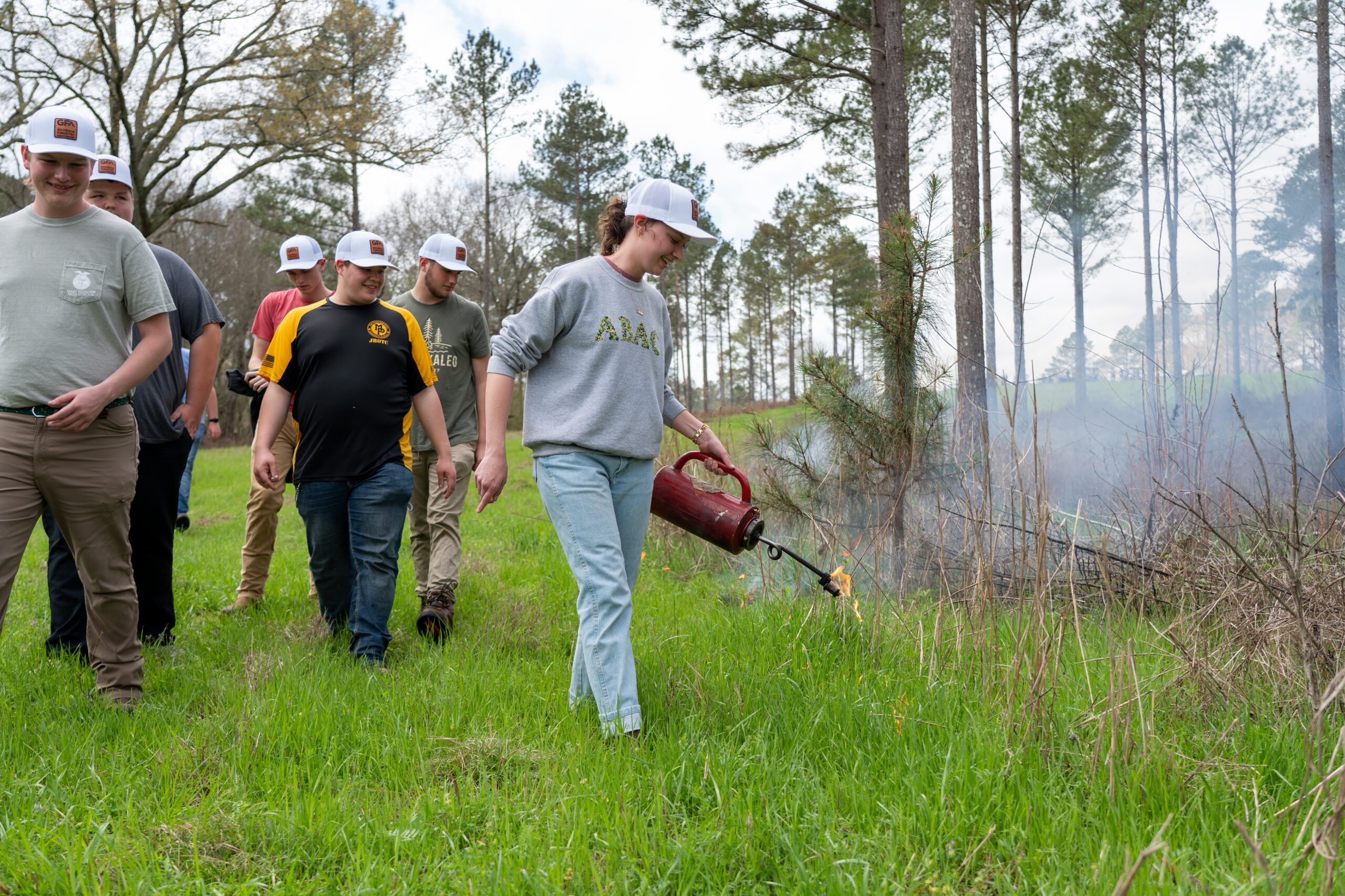
Participants also experienced live demonstrations, including prescribed fire techniques and an innovative drone application for burning—highlighting how technology continues to shape the future of forest management. A dedicated session on “burning for birds” emphasized the important connection between active forest management and wildlife habitat, particularly for species that depend on well-managed ecosystems.
Why it matters
Georgia is home to more than 22 million acres of forestland, with over 90% privately owned. That means the decisions made by individual landowners have a direct and lasting impact on the health of the state’s forests, its wildlife habitats, and the strength of the forestry economy.
Field days like this play a critical role in equipping landowners with the knowledge and confidence to make informed decisions. Whether managing land for timber production, recreation, conservation, or family legacy, access to trusted expertise helps ensure these forests remain productive and sustainable for generations to come.
Looking ahead
Momentum continues to build as interest in these field days grows across the state. The next Landowner Field Day will take place in Summerville on April 7, offering another opportunity for landowners to connect, learn, and see best practices in action.
In the meantime, you can view highlights from Culloden in the full photo album.
Bottom line
When landowners succeed, Georgia’s forests succeed. Investing in education and hands-on engagement today is key to protecting and strengthening the state’s working forests for the future.